RCM Auto RCM Auto

What Is the Best Way to Choose EV Accessories?

Time:2026-10-02 Author:Amelia
0%

Choosing the right EV accessory is less about appearance and more about daily driving needs. How To Choose Accessories For Electric Vehicles begins with understanding your car, charging setup, climate, and routine. A compact hatchback may need a trunk organizer, while a family SUV may benefit from durable floor mats and rear-seat protection. Small details matter. A cable that stays dry is safer to handle. A phone mount that blocks the driver’s view is not a smart purchase.

Reliable choices should match the vehicle manufacturer’s specifications and recognized safety standards. Check connector compatibility, charging capacity, weather resistance, warranty terms, and return policies before buying. For charging equipment, installation by a qualified professional can prevent costly mistakes. Owner manuals and trusted automotive organizations are more dependable than dramatic online reviews. Real user feedback still helps, especially when it describes winter performance, heat exposure, or long-term wear.

It is easy to buy too much. A polished accessory may add little value. I would question any product promising universal fit without clear measurements or testing information. Consider whether it protects the vehicle, improves comfort, or saves time. If not, leave it behind. Needs also change. A driver who once wanted a roof box may later prefer lower energy use and simpler travel. The best accessory list is practical, safe, and flexible, even when the first choice is not perfect. That honest review can save money and reduce frustration.
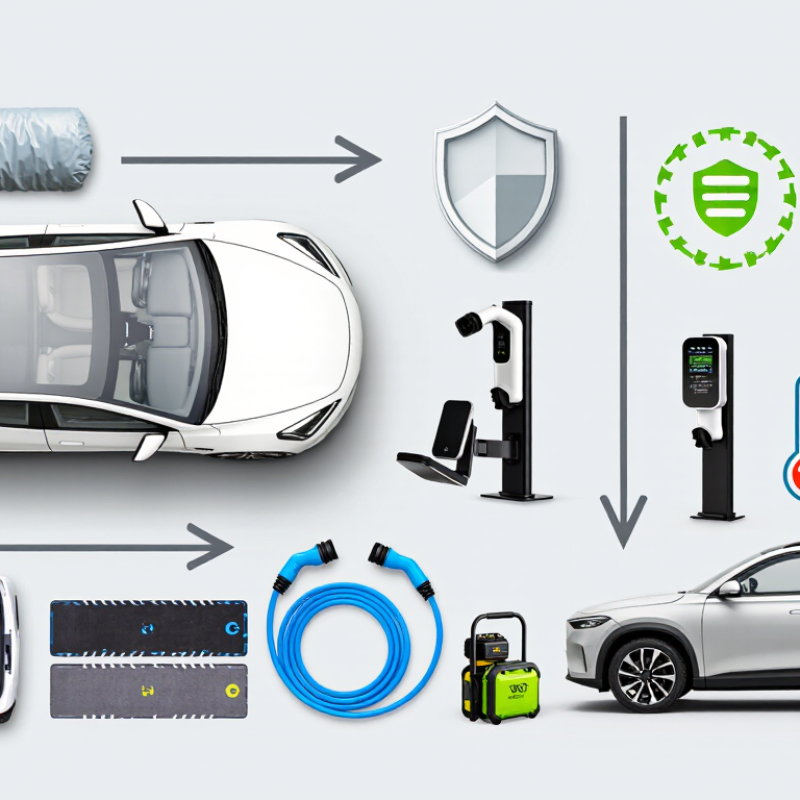
What Is the Best Way to Choose EV Accessories?

Define Your EV’s Compatibility and Accessory Requirements

What Is the Best Way to Choose EV Accessories?

Define Your EV’s Compatibility and Accessory Requirements

Choosing an EV accessory starts with compatibility, not appearance. The IEA’s Global EV Outlook 2024 reported nearly 14 million electric cars sold worldwide in 2023. This rapid growth has created many charging, storage, and safety options. However, similar-looking vehicles can use different connectors, voltage limits, and mounting points.

Check your owner’s manual, charging port type, battery capacity, and maximum charging rate. For home charging, compare the vehicle’s onboard charger with the equipment’s output. SAE J1772 and IEC 62196 standards help identify connector requirements, but regional installations still differ. A certified electrician should verify circuit capacity, grounding, and weather protection. Do not assume a higher-power charger will reduce charging time. The vehicle may limit the current.

Think about daily use. A commuter may need a compact cable bag, while a family may require a reinforced cargo liner and seat-back protection. The U.S. Department of Energy notes that cold temperatures can reduce EV range, so practical emergency equipment deserves attention. A portable tire inflator, reflective vest, and approved charging cable can be more useful than decorative upgrades. Small details matter.

Tips: Measure twice. Confirm the accessory’s dimensions, load rating, connector standard, and warranty terms. Read independent test results, not only product claims. I once underestimated cable length; the outlet was only one parking space away, yet the cable barely reached. That mistake was avoidable. Recheck fitment after installation and inspect cables for heat marks, cracks, or loose connections.

Identify the Main Types of EV Accessories

Choosing EV accessories starts with identifying what the vehicle and driver actually need. The main category is charging equipment, including portable cables, wall-mounted chargers, cable holders, and weather-resistant storage. A cable must match the vehicle inlet and the power supply available at home. Check connector type, charging speed, cable length, and electrical protection before purchasing. A longer cable seems convenient, but it can be heavy in a small trunk. Do not assume maximum charging speed is always useful. A home circuit may limit it.

The second category covers vehicle protection and storage. Rubber floor mats, trunk liners, seat covers, sunshades, and organizers protect against mud, rain, groceries, and sports equipment. Choose materials that stay flexible in cold weather. They must not block pedals, vents, airbags, or charging ports. Safety accessories form another group, including tire inflators, pressure gauges, warning triangles, flashlights, and insulated gloves. Keep them accessible, not buried beneath a charging cable. That matters during a dark roadside stop.

Connectivity and comfort accessories include phone mounts, cabin organizers, USB adapters, and rear-seat equipment. Select mounts that keep the driver’s view clear. Use electrical accessories with appropriate safety markings and avoid overloaded sockets. Some products look clever but create heat, rattling, or distraction. I would rather accept a plain design than risk a loose cable near the pedals. Compatibility information can also be incomplete, so checking the vehicle manual and local electrical requirements remains essential. A small mistake here may cost more than the accessory.

Evaluate Safety, Quality, and Certification Standards

What Is the Best Way to Choose EV Accessories?

Choosing EV accessories should begin with safety, not appearance or price. Check the accessory’s voltage, current capacity, heat resistance, and compatibility with your vehicle. A cable that feels thick may still have weak internal conductors. Look for clear technical specifications and independent test reports. Certification marks should be verifiable through an official database or testing organization. Do not trust printed symbols alone. I once underestimated connector strain relief, and repeated bending caused early wear. That mistake changed how I inspect charging equipment.

Tips: Examine plugs, seals, and cable joints closely. Choose suitable ingress protection for outdoor use. Avoid damaged or loosely fitting parts. Confirm that installation instructions match your electrical system. Keep receipts and test documents.

Quality also appears during daily use. A reliable accessory should remain stable after repeated charging sessions, temperature changes, and minor movement. Check whether the housing feels solid without becoming excessively heavy. Read technical reviews from experienced users, but compare them with documented test results. Personal opinions can miss electrical risks. Certification requirements also vary by location, so verify local rules before installation. This step is easy to overlook. Even careful buyers can rely too much on attractive packaging. A safer choice comes from traceable materials, qualified testing, and realistic performance claims.

What Is the Best Way to Choose EV Accessories? - Evaluate Safety, Quality, and Certification Standards

Accessory Category Key Safety Factors Quality Indicators Relevant Standards or Certifications Evidence to Request Evaluation Priority
AC or DC charging equipment Overcurrent protection, residual-current protection, temperature monitoring, correct grounding, and safe automatic shutdown. Stable power delivery, durable enclosure, clear status indicators, strain relief, and documented electrical testing. IEC 61851 for conductive charging systems; applicable national electrical codes; IEC 60529 for ingress protection where an IP rating is claimed. Declaration of conformity, test reports, installation instructions, rated voltage/current, protection-device specifications, and IP test details. Very High
Charging connectors and adapters Correct connector type, contact protection, mechanical locking, temperature resistance, and prevention of accidental energization. Precisely molded contacts, low contact resistance, firm fit, abrasion-resistant cable, and a verified current rating. IEC 62196 for plugs, socket-outlets, vehicle connectors, and vehicle inlets; IEC 61851 for charging-system compatibility. Connector standard, pin configuration, voltage/current rating, dimensional drawings, material specifications, and compatibility statement. Very High
Portable charging cables Protection against overheating, moisture, crushing, bending, and incorrect current selection. Flexible insulation, adequate conductor cross-section, reinforced cable ends, reliable control box, and visible rating labels. IEC 61851 and IEC 62196, as applicable; IEC 60529 where enclosure protection is specified; local plug safety requirements. Continuous and peak current ratings, operating-temperature range, cable construction, test results, and user instructions. High
Charging cable holders and wall mounts Load-bearing strength, secure installation, rounded edges, and prevention of cable trip hazards or connector impact. UV-resistant materials, corrosion-resistant fasteners, suitable wall anchors, and smooth contact surfaces that do not damage the cable. Material and installation requirements should follow the mounting surface and local building regulations; IEC 60529 may apply to outdoor enclosures. Maximum supported load, installation guide, material information, outdoor-use rating, and corrosion-resistance data. High
Portable power banks and auxiliary batteries Short-circuit, overcharge, over-discharge, thermal, impact, and transport safety. Battery-management system, cell traceability, balanced cells, robust casing, accurate capacity labeling, and cycle-life data. UN 38.3 testing is relevant to lithium battery transport; IEC 62133-2 addresses safety requirements for portable sealed secondary lithium cells and batteries. UN 38.3 test summary, IEC 62133-2 test evidence where applicable, safety data sheet, battery chemistry, and protection-circuit details. Very High
Vehicle-to-load discharge accessories Rated output limits, grounding method, overload protection, residual-current protection, and compatibility with the vehicle’s discharge function. Accurate power rating, durable connectors, thermal protection, clear operating limits, and automatic fault interruption. IEC 61851 principles may be relevant to conductive power transfer; local low-voltage electrical regulations also apply. Maximum output power, supported vehicle functions, protection scheme, wiring diagram, environmental rating, and independent test report. Very High
Wireless charging mounts and adapters Foreign-object detection, thermal control, electromagnetic compatibility, stable mounting, and safe power conversion. Consistent charging efficiency, temperature monitoring, strain relief, durable surface materials, and accurate power output claims. Qi specifications may apply to compatible wireless charging products; electromagnetic compatibility requirements depend on the sales market. Wireless charging compliance evidence, input/output ratings, EMC test report, thermal test results, and compatibility list. High
Inverters and vehicle power converters Overload, short-circuit, over-temperature, low-voltage, and reverse-polarity protection; adequate ventilation is essential. Stable output waveform, low standby consumption, quality cooling system, robust terminals, and transparent continuous-power rating. Applicable electrical-safety and electromagnetic-compatibility requirements vary by market and installation type; IEC 60529 may apply to enclosure protection. Continuous versus peak output, efficiency curve, protection functions, EMC results, installation instructions, and thermal derating data. Very High
Outdoor EV covers and protective cases Fire behavior, ventilation, moisture management, secure fastening, and avoidance of heat accumulation around electrical equipment. UV resistance, tear strength, breathable or waterproof construction suited to the use case, corrosion-resistant fasteners, and accurate dimensions. IEC 60529 applies to enclosure ingress-protection classifications, not automatically to fabric covers; fire and textile requirements vary by jurisdiction. Material composition, UV and water-resistance test data, temperature limits, care instructions, and installation guidance. Medium
Electronic monitoring and smart-control devices Electrical isolation, secure software updates, data protection, fail-safe behavior, and reliable communication during faults. Accurate measurement, event logging, firmware-update policy, long-term support, and clearly defined operating conditions. EMC requirements may include UN ECE R10 for applicable vehicle-related electrical components; cybersecurity and radio requirements depend on function and market. EMC test report, cybersecurity policy, privacy statement, software-support period, communication protocols, and electrical-isolation details. High
Selection rule: Give highest priority to electrical protection, compatibility, verified certification, environmental suitability, and clear technical documentation. A certification mark should be checked against the exact product model, rated configuration, issuing body, and applicable market requirements.

Compare Features, Costs, and Long-Term Value

What Is the Best Way to Choose EV Accessories?
Compare Features, Costs, and Long-Term Value

Choosing EV accessories starts with daily use, not attractive packaging. I measure the boot, check cable length, and consider where the vehicle usually charges. A compact charging cable may fit neatly under the floor, while a longer one can prevent awkward parking. Small details matter. Fit matters.

Features should solve a real problem. A weather-resistant storage bag protects connectors from rain and road dust. A certified charging device may offer temperature monitoring, overload protection, and clearer status signals. These features can cost more, but they reduce uncertainty during charging. I also check installation requirements and product documentation before buying.

Price alone can mislead. A cheaper floor liner may curl near the pedals, collect water, or wear thin after one winter. Replacing it twice can exceed the cost of a stronger option. However, expensive does not always mean better. I once favored extra compartments in an organizer, then found them difficult to clean. That surprised me. Long-term value includes durability, maintenance, warranty terms, energy use, and compatibility with future vehicle updates. Independent testing, transparent specifications, and qualified installation advice deserve more trust than exaggerated claims. Keep receipts and inspect accessories after several weeks, because real use often reveals weaknesses that a showroom cannot.

Select, Install, and Maintain Accessories Properly

Choosing EV accessories should begin with the vehicle’s real use, not attractive packaging. The IEA’s Global EV Outlook 2025 reports that electric car sales exceeded 17 million in 2024, representing more than 20% of new-car sales. More drivers now need practical charging, storage, and protection equipment. Check connector compatibility, voltage ratings, weather resistance, and the vehicle’s maximum charging capacity before buying. A small label can prevent a costly mistake.

Installation matters as much as selection. Use qualified technicians for hard-wired equipment, roof systems, and electrical upgrades. Follow the vehicle manual and the accessory’s tested instructions. Keep cables away from standing water, sharp edges, and hot surfaces. The U.S. Department of Energy notes that correct tire inflation supports energy efficiency, so a tire-pressure monitor can be useful. It cannot replace regular checks. That distinction is easy to miss.

Maintenance should be simple and visible. Inspect charging cables for cuts, bent pins, discoloration, or unusual heat before use. Clean connector covers and storage compartments with approved materials. The National Highway Traffic Safety Administration consistently emphasizes checking recalls and safety notices, including those involving charging equipment. Keep service records and replace damaged parts promptly. I once treated a loose cable as harmless; it was not. Convenience still needs judgment.

FAQS

What should I check before buying a charging cable?

Confirm the connector type, charging speed, cable length, and available power supply. A longer cable may feel useful. However, it can become heavy in a small trunk. Check the vehicle manual first.

Is maximum charging speed always the best choice?

No. Your home circuit may limit the available charging speed. Match the cable with the circuit’s voltage and current capacity. Faster is not always better.

Which accessories protect the vehicle interior?

Rubber floor mats, trunk liners, seat covers, sunshades, and organizers help block mud and rain. They also contain groceries and sports equipment. Choose materials that remain flexible in cold weather.

How can I check whether an accessory is safe?

Review its voltage, current capacity, heat resistance, and vehicle compatibility. Inspect plugs, seals, cable joints, and strain relief. A thick cable can still contain weak internal conductors.

Are certification marks enough to prove quality?

Not always. Verify certification marks through an official database or testing organization. Printed symbols alone may be misleading. Look for test documents and clear technical specifications.

What safety equipment should stay inside an electric vehicle?

Keep a tire inflator, pressure gauge, warning triangle, flashlight, and insulated gloves available. Store them where you can reach them quickly. Do not bury them under a charging cable.

How should I choose phone mounts and cabin organizers?

Choose a phone mount that keeps the driver’s view clear. Check that organizers do not obstruct pedals, vents, airbags, or charging ports. A plain design may be safer than a clever one.

What can reveal poor accessory quality during daily use?

Watch for heat, rattling, loose fittings, damaged seals, and repeated charging problems. Reliable products should tolerate temperature changes and minor movement. I sometimes trust attractive packaging too quickly. That deserves more caution.

Conclusion

Choosing the right EV accessories begins with understanding your vehicle’s model, charging system, available space, and daily driving needs. How To Choose Accessories For Electric Vehicles depends on matching each product to your EV’s compatibility requirements, whether you need charging equipment, cable storage, protective items, comfort upgrades, or practical organization tools. Before purchasing, check specifications, connection types, power limits, installation requirements, and whether the accessory is designed for electric vehicles.

Safety, quality, and certification should always come before appearance or low price. Compare materials, durability, performance, warranty coverage, energy efficiency, and total long-term value rather than focusing only on the initial cost. Accessories that are easy to use, maintain, and replace may provide greater value over time. Follow the manufacturer’s instructions for installation, use qualified assistance when necessary, and inspect accessories regularly for wear, damage, or reduced performance. A careful selection process can improve convenience, protect the vehicle, and support a safer, more efficient driving experience.

Amelia

Amelia

Amelia is a seasoned marketing professional with a wealth of expertise in our company’s core offerings. With an unwavering passion for driving growth and innovation, she plays a pivotal role in shaping our marketing strategies and enhancing brand visibility. A key aspect of her responsibilities......